

Have you ever wondered what happens after your car rolls into a performance shop and climbs onto those big spinning rollers? Does the dyno simply measure horsepower, or is there more going on behind the scenes?
At Autosauce in Lakeland, FL, dyno tuning is part science, part craftsmanship, and part conversation with your vehicle. Your car tells a story through its air-fuel mixture, engine speed, boost, temperatures, and power curve. Our job is to listen carefully, make controlled adjustments, and help the engine perform the way its hardware and driver intended.
Whether you are building a weekend project, refining a track car, or simply curious about performance tuning, here is what actually happens when your car hits the dyno.
What Is a Chassis Dyno?
A dynamometer, usually shortened to “dyno,” is a machine that measures how much power a vehicle produces.
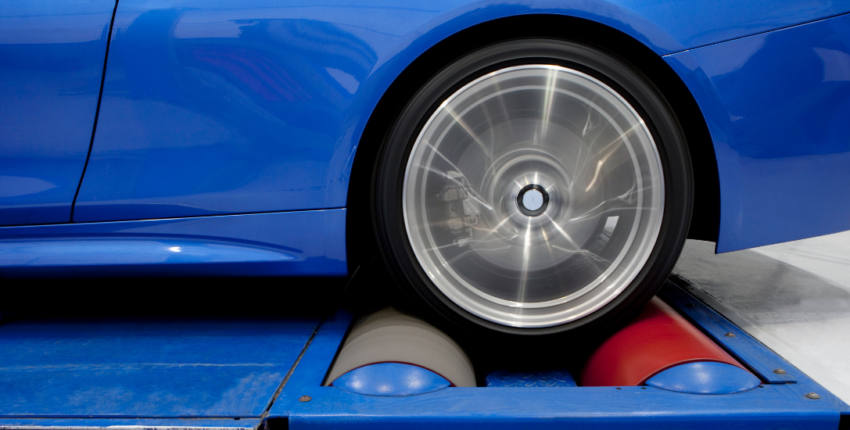
A chassis dyno tests the power delivered to the wheels. The drive wheels sit on heavy rollers, and the vehicle is secured in place with straps. When the engine accelerates, the rollers spin. The dyno measures the force and speed involved, then calculates horsepower and torque.
Think of it like a treadmill for your car, but one that can also measure how hard the car is working.
A chassis dyno can help a technician see:
- Horsepower across the engine’s RPM range
- Torque delivery and low-end response
- Air-fuel ratio, or the balance of fuel and oxygen entering the engine
- Boost pressure on turbocharged or supercharged vehicles
- Engine speed and load
- Potential misfires, knock activity, or unusual behavior
- How performance parts are working together
This controlled environment is one reason dyno tuning is so useful. Instead of making aggressive acceleration tests on public roads, the technician can evaluate the car in a controlled setting with repeatable conditions.
Before the First Pull: The Safety Check
Nobody should put a questionable vehicle on a dyno and immediately ask for maximum power. Before the rollers begin to whir, the vehicle needs a careful inspection.
At Autosauce, that means looking at the condition of the vehicle and considering whether it is ready for high-load testing. Oil, coolant, transmission fluid, brake fluid, tires, belts, hoses, engine mounts, driveline components, and fasteners all matter.
A loose lug nut or damaged tire is not a small detail when the wheel is spinning quickly on a roller. A cooling-system leak can turn a performance session into an overheating problem. Weak engine mounts or loose driveline hardware can create vibration, inaccurate readings, or unnecessary damage.
Fuel level matters, too. A vehicle should have enough fuel for consistent testing, especially when the engine is being evaluated at high load. The correct fuel type is also important when a calibration is built around a specific octane rating.
Our dyno tuning preparation checklist covers several of the items owners should review before arriving.
A healthy car gives better data. Better data leads to better tuning. Simple as that.
Step 1: Securing the Vehicle
Once the vehicle is ready, it is driven onto the dyno rollers. The technician positions the drive wheels correctly and secures the car with heavy-duty straps.
The straps keep the vehicle stable as the engine produces power. Large fans are positioned near the front of the car to provide airflow and help manage engine and intake temperatures. The goal is to create a controlled environment that resembles the airflow a vehicle would experience while moving down the road.
The technician also connects the necessary monitoring equipment. Depending on the vehicle and tuning goal, this may include communication with the engine control unit, an air-fuel-ratio sensor, boost monitoring, and other data channels.
Then comes the moment enthusiasts recognize: the engine starts to climb through the RPM range.
Whirr. Growl. Vroom.
The car is not going anywhere, but its engine is working.
Step 2: Establishing a Baseline
Before changing anything, the tuner needs to understand where the vehicle starts.
A baseline pull is an initial run using the vehicle’s current setup and calibration. It gives the team a starting point for comparing future results. The dyno records the power curve, torque curve, air-fuel behavior, and other relevant information.
This baseline can answer important questions:
- Is the engine making consistent power?
- Is the air-fuel ratio appropriate under load?
- Does the vehicle have a flat spot or hesitation?
- Is boost building as expected?
- Are there signs of a mechanical or sensor problem?
- Did a recent performance modification provide the expected result?
A baseline is more useful than a single peak horsepower number. Peak horsepower is only one moment in the engine’s operating range. A car can feel faster because it produces stronger mid-range torque, responds more quickly to the throttle, or carries power more smoothly toward redline.
That broad picture is where dyno data becomes valuable.
Step 3: Steady-State Testing and Power Pulls
Dyno tuning usually involves more than one kind of test.
Steady-state tuning
During steady-state testing, the dyno can hold the vehicle at a particular engine speed and load. This allows the tuner to examine how the engine behaves at specific points instead of only during a full-throttle acceleration run.
This is useful for refining drivability, part-throttle response, fueling, and other areas that affect everyday driving.
In plain English, it helps make the car feel good not only when your right foot is on the floor, but also when you are cruising through Lakeland traffic or smoothly accelerating onto the highway.
Ramp runs
A ramp run, often called a power pull, starts at a selected RPM and allows the engine to accelerate through a chosen range. The dyno controls the rate of acceleration while the technician monitors the data.
This provides a clear look at full-load performance. The resulting graph shows how horsepower and torque rise, peak, and fall through the RPM range.
The tuner may repeat these tests several times. That is normal. Dyno tuning is not a one-and-done button press. It is a measured process of testing, adjusting, and testing again.
Step 4: Making Calibration Changes
Modern performance tuning often involves adjusting the engine control unit, or ECU. The ECU is the vehicle’s computer, and its calibration tells the engine how to respond to different conditions.
Depending on the vehicle, modifications, and goals, a tuner may evaluate or adjust items such as:
- Fuel delivery
- Ignition timing
- Boost targets
- Throttle response
- Torque requests
- Rev limits
- Temperature and safety protections
Here is an easy analogy: the engine is an orchestra, and the ECU is the conductor. Fuel, ignition, airflow, boost, and throttle all need to arrive at the right time and in the right proportion. If one section is out of step, the engine may hesitate, run inefficiently, or fail to make the power its hardware can support.
The objective is not simply to chase the biggest dyno number. A responsible performance tune balances horsepower gains, torque, drivability, and reliability.
That balance is especially important for a street-driven vehicle. A car that produces impressive peak power but surges, overheats, or behaves poorly in traffic is not a very satisfying car to own.
Step 5: Comparing the Results
After adjustments, the vehicle returns to the rollers. The new data is compared with the baseline.
The final result may show:
- Increased peak horsepower
- More torque in the usable RPM range
- Sharper throttle response
- Smoother acceleration
- Better power consistency
- Improved compatibility between aftermarket parts and the engine calibration
The exact horsepower gain depends on the vehicle’s starting point, engine condition, fuel, modifications, and tuning goals. A mostly stock car may see a modest improvement, while a vehicle with upgraded intake, exhaust, turbocharger, fuel system, or engine components may have more potential to unlock.
Dyno tuning does not magically create power from nothing. It helps the engine make better use of the parts already installed.
Is Dyno Tuning Worth It for Everyday Drivers?
Dyno tuning is not only for race cars with slick tires and trailers.
A daily driver with performance modifications may benefit from a calibration that improves throttle response and smooths out power delivery. A car enthusiast may want a reliable baseline before adding parts. Someone who has installed major upgrades may need the vehicle’s calibration matched to the new hardware.
For drivers in Lakeland, the bigger benefit is confidence. You can see what the vehicle is doing instead of relying on guesses, internet estimates, or a generic tune that was not created for your exact setup.
If the data reveals an issue, professional diagnostics can also prevent you from spending money on more parts when the real problem is a sensor, fuel delivery concern, ignition issue, or mechanical fault. Autosauce provides advanced diagnostics and inspections as part of its broader automotive repair expertise.
Why Choose Autosauce for Performance Work in Lakeland?
Autosauce is a family-owned auto repair shop in Lakeland with a genuine passion for cars. Our certified technicians have more than eight years of experience, and our team is led by Ron Quick, who has more than 15 years in the automotive industry.
We combine everyday repair knowledge with performance work, which matters because a strong tune begins with a healthy vehicle. From engine repair and maintenance to state-of-the-art dyno tuning, our team looks at the entire vehicle, not just the number on the screen.
We also understand that every owner has a different goal. One driver may want a smoother street car. Another may be building a serious project. Someone else may simply want to know whether a modification delivered the promised results.
There is no single answer for every vehicle. The right approach starts with a conversation.
Ready to See What Your Car Can Really Do?
If your car is modified, feels sluggish, has an unexplained hesitation, or is ready for its next performance step, talk with Autosauce before making another guess under the hood.
Our team can help you understand whether dyno tuning, additional diagnostics, or general maintenance is the right next move. We will explain what the data means, discuss realistic horsepower gains, and help you pursue performance without losing sight of reliability.
Contact Autosauce in Lakeland, FL, or book an appointment to discuss your vehicle and performance goals. Your car has a story to tell. Let’s put it on the dyno and listen.